
The Flavours of Morocco: Top Moroccan Dishes You Must Try
Moroccan cuisine is a vibrant tapestry of flavours, aromas, and colours that reflect the country’s rich history and diverse cultural influences. From aromatic tagines to sweet pastries, here are some of the top Moroccan dishes you simply can’t miss:
Tagine
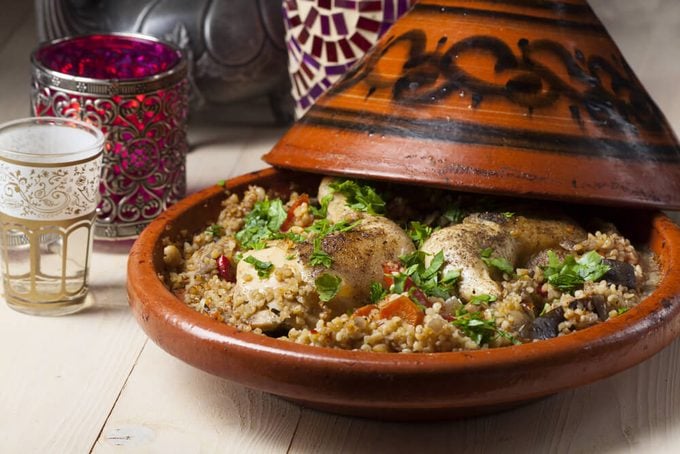
Tagine is perhaps the most iconic Moroccan dish. This slow-cooked stew features tender meat (often lamb or chicken) simmered with a blend of spices, dried fruits, and nuts. The dish takes its name from the traditional clay pot in which it is cooked.
Couscous
Couscous is a staple in Moroccan cuisine and is typically served with a rich stew of vegetables, meat, or fish. The tiny grains are steamed to perfection and topped with a hearty sauce that bursts with flavour.
Pastilla
This savoury-sweet pastry is a true delicacy in Morocco. Layers of thin pastry encase a filling of spiced meat (often pigeon or chicken), almonds, and eggs, all dusted with powdered sugar and cinnamon for a delightful contrast of flavours.
Harira
A comforting bowl of harira soup is often enjoyed during Ramadan to break the fast at sunset. This hearty soup combines tomatoes, lentils, chickpeas, and fragrant spices like cinnamon and ginger for a nourishing and flavourful meal.
Mint Tea
No culinary journey through Morocco is complete without sipping on traditional mint tea. This sweetened green tea infused with fresh mint leaves is not just a drink but an integral part of Moroccan hospitality and culture.
Mechoui
If you’re a fan of succulent roasted meat, mechoui won’t disappoint. This slow-roasted whole lamb or goat is seasoned with aromatic spices like cumin and paprika until the meat falls off the bone—a true feast for the senses.
These are just a few highlights from Morocco’s diverse culinary landscape. Each dish tells a story woven with tradition, craftsmanship, and an unbridled passion for good food. So next time you find yourself in Morocco or at a Moroccan restaurant, be sure to savour these top Moroccan dishes for an unforgettable gastronomic experience!
Exploring Moroccan Cuisine: Answers to 9 Common Questions About Traditional Dishes and Drinks
- What is a tagine in Moroccan cuisine?
- How is couscous traditionally served in Morocco?
- What is pastilla and what are its key ingredients?
- Why is harira soup significant in Moroccan culture?
- What makes mint tea a popular drink in Morocco?
- How is mechoui prepared and what meat is typically used?
- Are there vegetarian options available in Moroccan cuisine?
- Can you recommend some must-try desserts from Morocco?
- Where can I find authentic Moroccan restaurants outside of Morocco?
What is a tagine in Moroccan cuisine?
In Moroccan cuisine, a tagine is a quintessential dish that embodies the essence of traditional cooking methods and flavours. Named after the earthenware pot in which it is cooked, a tagine typically consists of tender meat (such as lamb or chicken), vegetables, dried fruits, nuts, and a harmonious blend of aromatic spices. The slow cooking process in a tagine pot allows the ingredients to meld together, creating a rich and fragrant stew-like dish that is both comforting and bursting with complex flavours. Tagine represents the heart and soul of Moroccan culinary heritage, offering a delightful taste of Morocco’s diverse cultural influences on a single plate.
How is couscous traditionally served in Morocco?
In Morocco, couscous is traditionally served as a hearty and flavourful dish that brings people together around a communal table. The steamed couscous grains are typically topped with a savoury stew made with vegetables, such as carrots, zucchini, and chickpeas, along with tender pieces of meat like lamb or chicken. The dish is often garnished with a sprinkle of aromatic herbs and spices to enhance its rich flavours. Couscous holds a special place in Moroccan culture as a symbol of hospitality and togetherness, making it a staple at festive gatherings and family meals across the country.
What is pastilla and what are its key ingredients?
Pastilla is a savoury-sweet Moroccan pastry that is a true culinary delight. This traditional dish features layers of thin, flaky pastry filled with a delicious combination of spiced meat, often pigeon or chicken, along with almonds and eggs. The filling is seasoned with a blend of aromatic spices such as cinnamon and saffron, creating a rich and complex flavour profile. Once baked to golden perfection, the pastilla is dusted with powdered sugar and cinnamon, adding a delightful sweet touch that beautifully complements the savoury elements. This harmonious blend of sweet and savoury flavours makes pastilla a standout dish in Moroccan cuisine, perfect for special occasions or simply indulging in a taste of Morocco’s culinary heritage.
Why is harira soup significant in Moroccan culture?
Harira soup holds significant cultural importance in Moroccan cuisine for several reasons. Firstly, it is a staple during the holy month of Ramadan, where Muslims break their fast at sunset with a bowl of this nourishing soup. The comforting blend of tomatoes, lentils, chickpeas, and aromatic spices not only provides sustenance but also symbolizes unity and community as families and friends come together to share this traditional dish. Additionally, harira soup reflects Morocco’s diverse culinary heritage, blending Berber, Arab, and French influences into a harmonious bowl that embodies the country’s rich history and cultural fusion. Its presence on Moroccan tables signifies warmth, hospitality, and the timeless tradition of breaking bread—or in this case, soup—together.
What makes mint tea a popular drink in Morocco?
Mint tea holds a special place in Moroccan culture and is revered for more than just its refreshing taste. Known as “Moroccan whiskey,” this sweetened green tea infused with fresh mint leaves embodies hospitality, tradition, and social connection in Morocco. The intricate ritual of preparing and serving mint tea symbolizes friendship, respect, and warmth towards guests. The soothing blend of mint and tea not only aids digestion after a meal but also offers a moment of relaxation and contemplation in the bustling Moroccan day. Embodying the essence of Moroccan hospitality, mint tea has become a beloved national drink that transcends mere refreshment to create meaningful connections between people.
How is mechoui prepared and what meat is typically used?
Mechoui, a beloved Moroccan dish, is prepared by slow-roasting a whole lamb or goat over an open fire or in a special oven. The meat is seasoned with a blend of traditional Moroccan spices such as cumin, paprika, and garlic, resulting in tender and flavourful meat that falls off the bone. Mechoui is often cooked for festive occasions and special gatherings, showcasing the rich culinary heritage of Morocco. The choice of meat for mechoui typically includes lamb or goat due to their succulent texture and ability to absorb the aromatic flavours during the slow roasting process.
Are there vegetarian options available in Moroccan cuisine?
In Moroccan cuisine, there are indeed a variety of delectable vegetarian options available that showcase the rich flavours and vibrant ingredients of the country. From hearty vegetable tagines bursting with spices and dried fruits to fragrant couscous dishes adorned with an array of colourful vegetables, vegetarians can delight in the diverse and flavourful offerings of Moroccan gastronomy. Additionally, dishes like falafel, vegetable pastilla, and harira soup provide delicious alternatives for those seeking meat-free options while still experiencing the authentic tastes of Morocco. With its emphasis on fresh produce, aromatic herbs, and intricate spice blends, Moroccan cuisine offers a tantalising array of vegetarian delights that cater to every palate.
Can you recommend some must-try desserts from Morocco?
Indulge your sweet tooth with a delightful array of Moroccan desserts that are sure to tantalise your taste buds. From the iconic honey-soaked pastries of baklava and chebakia to the aromatic almond-filled delights of almond briouats and sellou, Morocco offers a treasure trove of must-try sweets. Don’t miss out on the decadent layers of flaky pastry in mille-feuille or the refreshing citrusy notes of orange blossom water in traditional Moroccan fruit salads. These desserts not only satisfy your cravings but also provide a glimpse into the rich culinary heritage of Morocco, where every bite is a celebration of flavour and tradition.
Where can I find authentic Moroccan restaurants outside of Morocco?
For those seeking authentic Moroccan cuisine outside of Morocco, the quest for traditional flavours and aromas can lead to a delightful culinary adventure. While finding truly authentic Moroccan restaurants abroad may require some exploration, major cities with diverse dining scenes often boast establishments that faithfully recreate the essence of Moroccan gastronomy. Look for restaurants run by Moroccan chefs or owners, where the menu features classic dishes like tagines, couscous, and pastries prepared with genuine spices and ingredients sourced from Morocco. Additionally, seeking out local recommendations or exploring areas known for their cultural diversity can uncover hidden gems that offer a taste of Morocco’s culinary heritage in far-flung corners of the world.
Related Posts
Discover the Best Morocco Travel Guide for Your North African Adventure
The Ultimate Morocco Travel Guide: Unveiling the Best of North…
Essaouira Guide: Unveiling the Charms of Morocco’s Coastal Jewel
Essaouira: Your Ultimate Guide to the Jewel of the Atlantic…

Discover the Top-Rated Tourist Attractions in Morocco
The Best Tourist Attractions in Morocco From the bustling markets…