
A Taste of Morocco: A Guide to Moroccan Cuisine
Moroccan cuisine is a celebration of colour, fragrance and hospitality. Shaped by Amazigh, Arab, Andalusian, Mediterranean and sub-Saharan influences, it brings together aromatic spices, fresh herbs, seasonal produce and slow-cooked dishes. From a steaming bowl of harira to a sweet glass of mint tea, food is an essential part of everyday life and a warm welcome for visitors.
The flavours of Morocco
Moroccan cooking is often richly seasoned, but it is not always hot with chilli. Cumin, ginger, turmeric, paprika, cinnamon and saffron add depth and warmth, while fresh coriander and parsley bring a bright, herbal finish. Preserved lemons and olives lend a distinctive salty sharpness, and ingredients such as almonds, dates, raisins and honey create gentle sweetness.
One much-loved spice mixture is ras el hanout. Its ingredients vary from one cook or spice merchant to another, but it commonly combines several fragrant spices. The result is a complex seasoning used in dishes such as tagines and couscous.
Tagines: slow cooking with a signature flavour
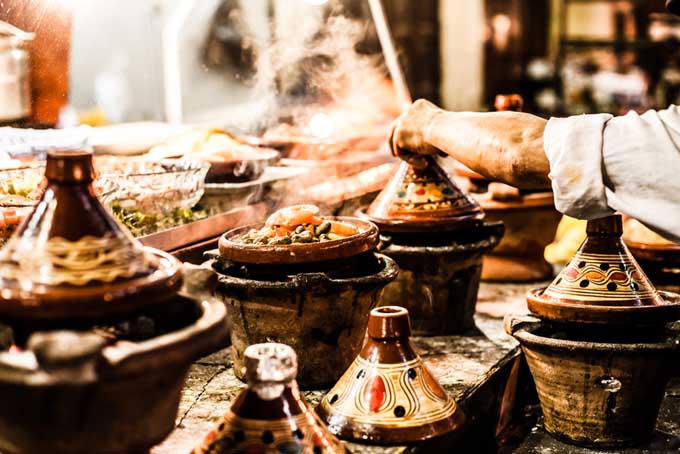
The word tagine refers both to the conical-lidded clay pot and to the dish cooked inside it. The shape helps circulate steam, allowing ingredients to cook slowly and become tender. Popular versions include chicken with preserved lemon and olives, lamb with prunes, and vegetable tagines filled with seasonal produce.
Recipes differ between households and regions. Some are savoury and deeply spiced; others balance meat with dried fruit and a hint of cinnamon. Tagines are often served with bread, which is used to scoop up the sauce.
Couscous and other everyday staples
Couscous—tiny steamed grains of semolina—is one of Morocco’s best-known dishes. It is commonly served with vegetables and a broth, sometimes alongside meat. Many families enjoy couscous on Fridays, although customs and routines vary. Preparing it traditionally can involve steaming the grains several times to give them a light, fluffy texture.
Bread is another daily staple. Round loaves are served with meals and used in place of cutlery in some settings. In cities and towns, bakeries and neighbourhood ovens are part of everyday life, while regional breads vary in shape and ingredients.
Soups, snacks and street food
Harira is a nourishing soup made in many different ways, often with tomatoes, lentils, chickpeas, herbs and spices. It is especially associated with Ramadan, when it is commonly served to break the daily fast, but it can be enjoyed throughout the year.
For a quick bite, look out for bissara, a warming purée of broad beans or split peas, often topped with olive oil and cumin. Moroccan street-food favourites also include grilled meats, savoury pastries and msemen, a flaky pan-cooked flatbread. In coastal towns, seafood is a highlight: grilled sardines are particularly popular.
Sweet treats and mint tea
Moroccan sweets often combine nuts, honey, sesame seeds and fragrant orange-blossom water. Chebakia, a sesame pastry coated in honey, is especially associated with Ramadan. Almond-based pastries and honey-dipped treats are also widely enjoyed, often alongside a glass of tea.
Moroccan mint tea—green tea brewed with fresh mint and sugar—is a familiar symbol of hospitality. It is traditionally poured from a height, creating a little froth in the glass. Recipes and preferences vary, so the tea may be sweeter or less sweet depending on the household.
Eating in Morocco
Meals are often shared, with several people eating from a central dish. In a traditional setting, diners may use pieces of bread to take food from the portion nearest them. It is courteous to follow the host’s lead, and washing hands before a meal may be part of the routine.
Morocco’s food culture is diverse, and dishes can vary considerably from one region or family to another. Exploring local markets, cafés and home-style restaurants is a rewarding way to discover that variety. Whether you are tasting a slow-cooked tagine, sampling fresh seafood by the coast or accepting a glass of mint tea, Moroccan cuisine offers a memorable invitation to slow down and share.
Exploring Moroccan Cuisine: 9 Essential Tips for a Delicious Journey
- Try a slow-cooked tagine with bread.
- Sample couscous, often served on Fridays.
- Sip sweet mint tea as a sign of hospitality.
- Taste harira, a hearty tomato and lentil soup.
- Look for pastilla, a savoury-sweet pastry.
- Explore spice markets for cumin, saffron and ras el hanout.
- Enjoy fresh seafood in coastal towns.
- Try msemen, flaky pan-fried flatbread.
- Ask about spice levels if you prefer milder dishes.
Try a slow-cooked tagine with bread.
Try a slow-cooked tagine with bread for a delicious taste of Moroccan home cooking. Gently simmered with fragrant spices, vegetables and perhaps meat or dried fruit, a tagine develops rich, comforting flavours. Tear off a piece of fresh Moroccan bread to scoop up the tender ingredients and savour every bit of the sauce.
Sample couscous, often served on Fridays.
Try couscous, one of Morocco’s best-loved dishes and a Friday favourite in many households. Steamed semolina grains are typically served with vegetables and a fragrant broth, sometimes accompanied by meat. Recipes vary from region to region, so it’s a delicious way to discover local flavours.
Sip sweet mint tea as a sign of hospitality.
In Morocco, sweet mint tea is much more than a refreshing drink: it is a cherished gesture of hospitality. Often made with green tea, fresh mint and plenty of sugar, it is served to welcome guests and encourage them to pause and enjoy a moment together. If you are offered a glass, accepting it is a lovely way to share in this tradition—though you can politely ask for less sugar if you prefer.
Taste harira, a hearty tomato and lentil soup.
Warm, filling and full of flavour, harira is a much-loved Moroccan soup made with tomatoes, lentils, herbs and spices, often with chickpeas too. It is traditionally served during Ramadan to break the fast, but you can enjoy a bowl any time of year. Try it with fresh bread and a squeeze of lemon for a comforting taste of Morocco.
Look for pastilla, a savoury-sweet pastry.
Look out for pastilla, a distinctive Moroccan pastry that brings savoury and sweet flavours together. Traditionally made with flaky pastry and filled with spiced pigeon or chicken, almonds and eggs, it is often dusted with icing sugar and cinnamon. Recipes vary by region and cook, and seafood versions are also popular, so it is well worth trying more than one.
Explore spice markets for cumin, saffron and ras el hanout.
Explore Morocco’s bustling spice markets to discover the aromas and flavours at the heart of its cuisine. Look out for earthy cumin, fragrant saffron and ras el hanout, a richly aromatic blend whose ingredients vary from one seller to another. Take time to compare the colours and scents, and ask the stallholder how each spice is traditionally used. If you plan to cook with your purchases, buy from a reputable seller and check how much you are allowed to bring home.
Enjoy fresh seafood in coastal towns.
In Morocco’s coastal towns, fresh seafood is a must-try. Look for local cafés and restaurants serving the day’s catch, from simply grilled sardines to fragrant seafood tagines. Ingredients and cooking styles vary from place to place, so ask what is fresh and enjoy your meal with warm bread and a squeeze of lemon.
Try msemen, flaky pan-fried flatbread.
Try msemen, a flaky, pan-fried Moroccan flatbread that’s crisp on the outside and soft and layered within. Enjoy it warm for breakfast or as a snack, with honey, butter or cheese, and pair it with a glass of mint tea for a delicious taste of everyday Moroccan cuisine.
Ask about spice levels if you prefer milder dishes.
Moroccan food is full of fragrant spices, but it isn’t always hot. If you prefer milder flavours, ask your server about the spice level before ordering, as recipes can vary between restaurants. You can also request a gentler version or ask for chilli and spicy sauces to be served separately.
Related Posts

Essaouira’s Enchanting Beaches: A Coastal Haven in Morocco
Exploring the Beautiful Beaches of Essaouira Exploring the Beautiful Beaches…
Discover the Enchantment of Meknes through Sightseeing
Exploring the Beauty of Meknes Exploring the Beauty of Meknes…

Car Moving Services: A Complete Guide to Transporting Your Vehicle
Car Moving Services: A Guide to Transporting Your Vehicle Whether…