
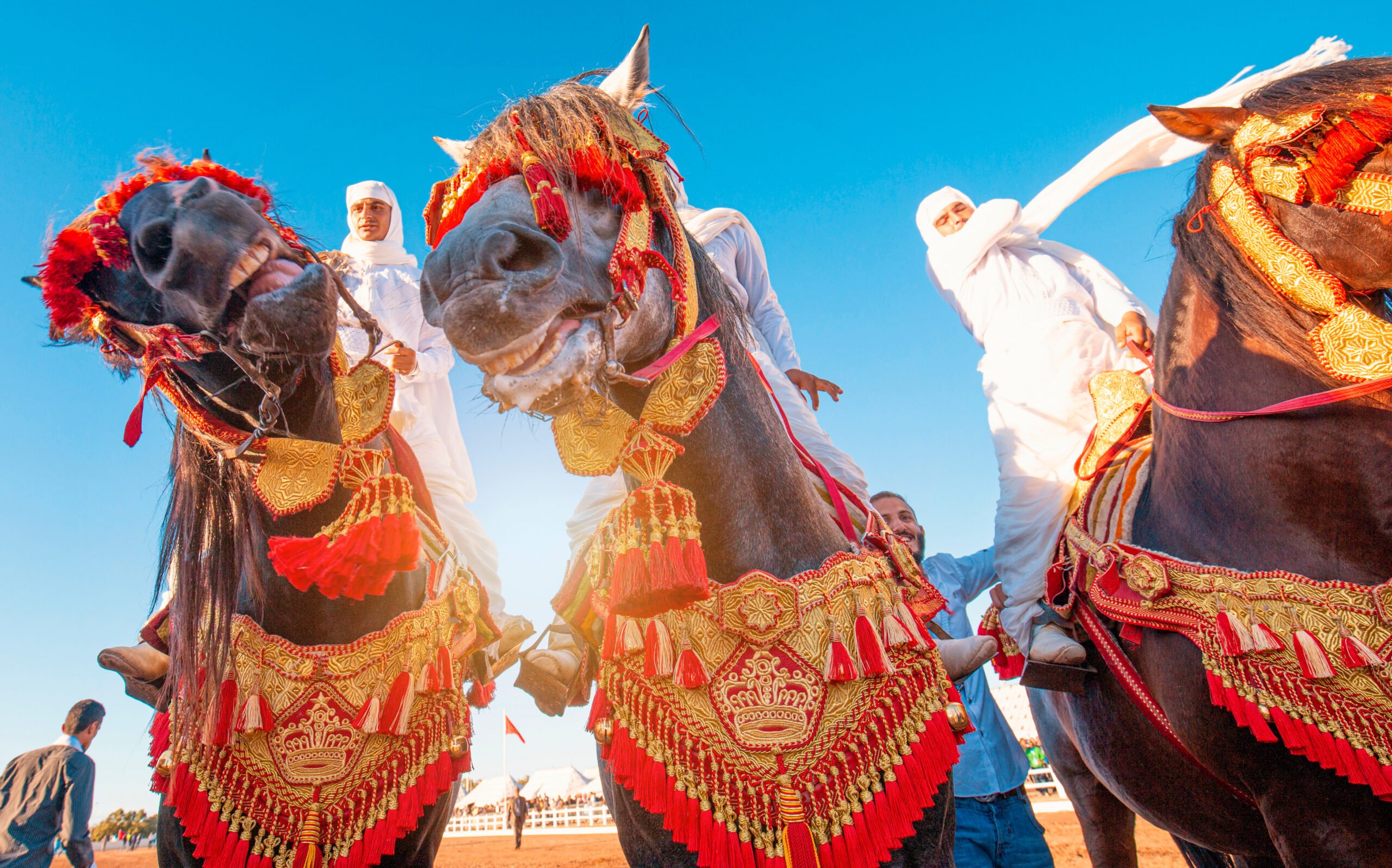
The Rich Tapestry of Customs and Traditions in Morocco
Morocco, a land of vibrant colours, intoxicating scents, and warm hospitality, is steeped in a rich tapestry of customs and traditions that have been passed down through generations. These cultural practices not only define the Moroccan way of life but also offer a glimpse into the country’s diverse heritage.
Family Values and Hospitality
In Morocco, family is at the heart of society. Respect for elders, close-knit family bonds, and communal living are cherished values. Hospitality, known as “l’hospitalité marocaine,” is a cornerstone of Moroccan culture. Guests are treated with utmost warmth and generosity, often welcomed with traditional mint tea and sweet pastries.
The Art of Tea Drinking
Morocco’s tea culture is an integral part of daily life. The preparation and serving of mint tea (known as “atay”) hold special significance. It is not just a drink but a symbol of friendship, hospitality, and tradition. The elaborate tea ceremony involves multiple pourings to ensure the perfect blend of flavours.
Festivals and Celebrations
Throughout the year, Moroccans celebrate a myriad of festivals that reflect their religious beliefs, agricultural traditions, and historical events. From the vibrant festivities of Eid al-Fitr and Eid al-Adha to the colourful processions of Mawlid al-Nabi (the Prophet’s birthday), these occasions unite communities in joyous celebration.
The Souks: A Shopper’s Paradise
The bustling markets or “souks” in Morocco are a sensory delight for visitors. Here, traditional craftsmanship thrives as artisans showcase their skills in creating intricate textiles, ceramics, leather goods, and jewellery. Bargaining is an essential part of the shopping experience—a practice that adds to the charm of these vibrant marketplaces.
Cuisine: A Culinary Journey
Moroccan cuisine is renowned for its bold flavours and aromatic spices. Dishes like tagines (slow-cooked stews), couscous (steamed semolina), and pastilla (a savoury pastry) tantalise taste buds with their unique blend of sweet and savoury notes. Sharing meals with loved ones is a cherished tradition that fosters unity and connection.
Traditional Attire: A Reflection of Culture
The traditional dress in Morocco reflects both cultural heritage and regional identity. From the flowing djellaba worn by men to the intricate caftans adorned by women during special occasions, each garment tells a story steeped in history and craftsmanship.
Conclusion
Exploring the customs and traditions of Morocco offers a glimpse into a world where ancient rituals intertwine with modern life. From family values to festive celebrations, every aspect of Moroccan culture reflects a deep-rooted sense of community, respect for heritage, and appreciation for life’s simple pleasures.
Navigating Moroccan Customs: 8 Essential Tips for Visitors
- When greeting someone in Morocco, it is common to shake hands and say ‘Salam alaikum’ (peace be upon you).
- It is polite to accept tea if offered as a sign of hospitality.
- In Moroccan culture, it is customary to remove your shoes before entering someone’s home.
- Respect local customs by dressing modestly, especially when visiting religious sites.
- During Ramadan, it is respectful not to eat, drink or smoke in public during daylight hours.
- Haggling is a common practice in Moroccan markets, so feel free to negotiate prices when shopping.
- Friday is the holy day in Islam, so some businesses may be closed for prayers. Plan accordingly.
- ‘Insha’Allah’ (God willing) is often used when talking about future plans as a way of acknowledging fate.
When greeting someone in Morocco, it is common to shake hands and say ‘Salam alaikum’ (peace be upon you).
In Morocco, the act of greeting someone carries a deep significance rooted in tradition and respect. When meeting another person, it is customary to extend a handshake while saying ‘Salam alaikum’—an Arabic phrase meaning ‘peace be upon you’. This simple yet profound gesture not only conveys goodwill and warmth but also reflects the cultural value placed on harmony and mutual respect in Moroccan society.
It is polite to accept tea if offered as a sign of hospitality.
In Moroccan culture, accepting tea when it is offered is not just a gesture of politeness but a symbol of embracing hospitality and building connections. The ritual of sharing mint tea, known as “atay,” signifies respect for the host and an openness to engage in meaningful conversations. By accepting this simple yet significant offer, one can experience firsthand the warmth and generosity that are at the core of Moroccan customs and traditions.
In Moroccan culture, it is customary to remove your shoes before entering someone’s home.
In Moroccan culture, a gesture as simple yet meaningful as removing your shoes before entering someone’s home embodies a deep-rooted tradition of respect and hospitality. By adhering to this custom, visitors not only show reverence for the cleanliness of the host’s living space but also symbolise a willingness to leave behind the outside world and step into a realm of warmth and connection. This act of shoe removal serves as a gentle reminder of the importance of courtesy and consideration in Moroccan social interactions, fostering a sense of harmony and mutual regard among guests and hosts alike.
Respect local customs by dressing modestly, especially when visiting religious sites.
When exploring the vibrant culture of Morocco, it is essential to show respect for local customs by dressing modestly, particularly when visiting religious sites. Adhering to modest attire not only demonstrates cultural sensitivity but also honours the traditions and beliefs of the Moroccan people. By dressing respectfully, visitors can immerse themselves more deeply in the rich tapestry of Moroccan customs and traditions, fostering a deeper connection with this enchanting country.
During Ramadan, it is respectful not to eat, drink or smoke in public during daylight hours.
During Ramadan in Morocco, observing the tradition of refraining from eating, drinking, or smoking in public during daylight hours is a sign of respect for the holy month. This practice honours the spiritual significance of fasting and demonstrates solidarity with those who are observing this sacred time. By adhering to this custom, individuals show reverence for the values of self-discipline, empathy, and community that are central to the observance of Ramadan in Moroccan culture.
Haggling is a common practice in Moroccan markets, so feel free to negotiate prices when shopping.
When navigating the vibrant markets of Morocco, remember that haggling is a customary practice deeply ingrained in the local culture. Embrace the art of negotiation as you explore the bustling souks, where vendors expect and appreciate friendly haggling over prices. Feel empowered to engage in this age-old tradition when shopping for artisanal goods, textiles, or spices, as it not only adds to the excitement of the experience but also allows you to secure unique treasures at fair prices.
Friday is the holy day in Islam, so some businesses may be closed for prayers. Plan accordingly.
On Fridays, the holiest day in Islam, it is important to note that some businesses in Morocco may be closed for prayers. Understanding and respecting this cultural practice is essential when planning your activities or errands. By acknowledging the significance of Friday as a day of worship and reflection, visitors can immerse themselves more deeply in the local customs and traditions of Morocco.
‘Insha’Allah’ (God willing) is often used when talking about future plans as a way of acknowledging fate.
“In Morocco, the phrase ‘Insha’Allah’ holds profound significance in conversations about future plans. Translating to ‘God willing,’ this expression serves as a poignant acknowledgment of fate and divine intervention. By invoking ‘Insha’Allah,’ Moroccans convey a deep sense of humility and acceptance, recognising that ultimate outcomes are in the hands of a higher power. This cultural custom not only reflects the strong religious beliefs prevalent in Moroccan society but also underscores the importance of embracing uncertainty with grace and faith.”
Related Posts
Discover the Finest Sahara Tours Departing from Marrakech
Best Sahara Tours from Marrakech The Magic of the Sahara:…
Discover the Enchantment of Fes: A Sightseeing Expedition in Morocco
Exploring the Wonders of Fes: A Sightseeing Adventure Exploring the…
Beginner-Friendly Cooking Courses: A Gateway to Culinary Mastery
Cooking Courses for Beginners The Art of Cooking: Beginner-Friendly Courses…