
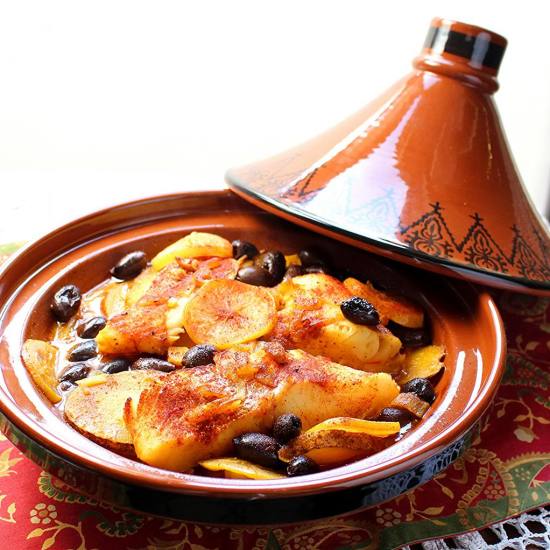
Moroccan Chicken Tagine Recipe
A tagine is both the name of a traditional Moroccan cooking pot and the slow-cooked dish prepared in it. This chicken tagine combines warming spices, green olives and preserved lemon for a fragrant, savoury meal. It can be cooked in a tagine pot or a heavy-based casserole with a lid.
Serves: 4
Preparation time: 20 minutes, plus optional marinating
Cooking time: 1 hour 15 minutes
Ingredients
- 8 bone-in, skin-on chicken thighs
- 2 tbsp olive oil
- 1 large onion, finely sliced
- 3 garlic cloves, finely chopped
- 1 tsp ground ginger
- 1 tsp ground cumin
- 1 tsp ground paprika
- ½ tsp ground turmeric
- ¼ tsp ground cinnamon
- 250ml chicken stock
- 1 preserved lemon, pulp removed and rind finely sliced
- 100g green olives, pitted
- Small bunch of fresh coriander, chopped
- Small bunch of fresh flat-leaf parsley, chopped
- Sea salt and freshly ground black pepper
Method
- Season the chicken. Pat the chicken thighs dry and season lightly with salt and pepper. Preserved lemons and olives are salty, so take care not to over-season.
- Brown the chicken. Heat the olive oil in a tagine base or heavy-based casserole over a medium heat. Brown the chicken in batches for 5–7 minutes, turning once, then transfer to a plate.
- Cook the onion and spices. Add the sliced onion to the pot and cook for 6–8 minutes until softened. Stir in the garlic, ginger, cumin, paprika, turmeric and cinnamon. Cook for 1 minute, stirring, until fragrant.
- Simmer the tagine. Pour in the chicken stock and scrape up any browned bits from the base. Return the chicken to the pot, skin-side up. Add the preserved lemon rind. Cover and cook gently for 45 minutes.
- Add the olives. Stir in the olives and continue cooking, covered, for 15–20 minutes, until the chicken is tender and cooked through. If the sauce is too thin, uncover the pot for the final few minutes to let it reduce.
- Finish and serve. Stir through the coriander and parsley, or scatter them over the top. Taste the sauce and adjust the seasoning if needed.
What to Serve with Chicken Tagine
Serve the tagine hot with couscous, warm flatbreads or crusty bread to soak up the sauce. A simple salad of tomatoes, cucumber and herbs makes a refreshing accompaniment.
Tips for a Delicious Tagine
- No tagine pot? A lidded casserole or Dutch oven works well. Keep the heat low and check occasionally that the sauce is gently simmering rather than boiling rapidly.
- Using a traditional clay tagine? Follow the manufacturer’s instructions. Some clay pots need to be soaked or placed over a heat diffuser, and they should be heated gradually to help prevent cracking.
- No preserved lemon? Use finely grated lemon zest and a small squeeze of lemon juice. The flavour will be brighter and less salty, so add the juice to taste.
- Make it ahead. The flavours develop as the tagine rests, making it a good dish to prepare in advance. Cool leftovers promptly, refrigerate and reheat thoroughly before serving.
This comforting chicken tagine brings together citrus, olives and gentle spices in a rich, aromatic sauce. It is a straightforward introduction to Moroccan home cooking and a satisfying centrepiece for a shared meal.
Tagine Cooking FAQs: Ingredients, Techniques and Common Mistakes
- What are some common tagine mistakes?
- What is tagine sauce made of?
- What makes a dish tagine?
- What can I cook in my tagine?
- What is the difference between curry and tagine?
- What is the base of a tagine?
- Do you put a tagine in the oven or on the hob?
What are some common tagine mistakes?
Common tagine mistakes include cooking over heat that is too high, which can scorch the ingredients or crack a traditional clay pot, and adding too much liquid, as tagines cook gently and retain moisture. Avoid lifting the lid too often, since this releases steam and slows cooking. It is also easy to over-salt the dish: preserved lemons, olives and stock can all be salty, so season lightly at first and adjust at the end. Finally, allow enough time for the meat and vegetables to become tender, and follow the care instructions for your tagine pot.
What is tagine sauce made of?
Tagine sauce is usually made from onions, garlic, spices and stock, slowly cooked with the meat or vegetables until rich and fragrant. Common seasonings include ginger, cumin, turmeric, paprika and cinnamon, while recipes may add tomatoes, herbs, olives or preserved lemon for extra flavour. The ingredients vary by region and recipe, but the sauce is typically savoury, aromatic and perfect for serving with couscous or bread.
What makes a dish tagine?
A dish is called a tagine because it is traditionally slow-cooked in a tagine: a distinctive clay pot with a wide, shallow base and a conical lid that helps circulate steam and keep the food tender. The word also refers to the stew itself, which often combines meat, fish or vegetables with spices, herbs, fruit or olives. You can make a tagine-style dish in a heavy-based casserole if you do not have the traditional pot; the slow cooking and characteristic blend of ingredients matter just as much.
What can I cook in my tagine?
A tagine is ideal for slow-cooking dishes that benefit from gentle heat and plenty of flavour. Try Moroccan favourites such as chicken with preserved lemon and olives, lamb with apricots, or vegetable tagine with chickpeas. You can also use it to cook stews with fish, beans or seasonal vegetables. Add a little liquid, keep the heat low and allow the ingredients to simmer until tender. Check your tagine’s care instructions before cooking, as traditional clay pots may need special preparation.
What is the difference between curry and tagine?
Curry and tagine are both flavourful, spiced dishes, but they come from different culinary traditions and are usually prepared differently. Curry refers to a broad range of South Asian and other dishes, often cooked in a spiced sauce, while a tagine is a Moroccan slow-cooked stew, traditionally made in a conical-lidded pot of the same name. Tagines commonly feature ingredients such as meat, vegetables, olives, dried fruit and preserved lemon, with spices like cumin, ginger and cinnamon. Although the dishes can share some spices and rich sauces, they have distinct ingredients, flavours and cultural roots.
What is the base of a tagine?
The base of a tagine is a wide, shallow dish that holds the ingredients as they cook. Traditionally made from clay or ceramic, it sits beneath a tall, cone-shaped lid, which helps trap steam and return moisture to the food. If you mean the base of the dish itself, tagine recipes often begin with onions, spices and a little oil or stock, creating a fragrant foundation for the meat or vegetables.
Do you put a tagine in the oven or on the hob?
A tagine can be cooked on the hob or in the oven, but check the manufacturer’s instructions first, as not every pot is suitable for both. On the hob, use a low heat and a heat diffuser where recommended, especially with a traditional clay tagine, to help prevent cracking. In the oven, make sure the tagine is rated as oven-safe and avoid sudden temperature changes. If you do not have a tagine pot, a covered, heavy-based casserole is a reliable alternative.
Related Posts

The Enduring History of Jews in Morocco: A Rich Cultural Tapestry
History of Jews in Morocco The Rich History of Jews…

Savour the Exquisite Flavours of Moroccan Lamb Couscous
The Delightful Flavours of Lamb Couscous in Moroccan Cuisine When…

Holiday to Morocco: A Guide to Planning Your Perfect Trip
Planning a Holiday to Morocco A holiday to Morocco can…