
Tagine Recipes: A Taste of Morocco
A tagine is both a traditional Moroccan cooking pot and the slow-cooked dish made in it. The pot’s distinctive conical lid helps keep moisture circulating, producing tender meat and vegetables in a fragrant sauce. You don’t need a tagine pot to make a delicious tagine: a heavy casserole dish with a lid works well too.
Tagines often combine warming spices with ingredients such as olives, preserved lemons, dried fruit, chickpeas and fresh herbs. The recipes below offer three different ways to enjoy this much-loved style of Moroccan cooking.
Chicken Tagine with Preserved Lemon and Olives
This classic combination balances savoury olives and fragrant spices with the bright, salty tang of preserved lemon. Serve it with couscous or crusty bread to enjoy every drop of the sauce.
Ingredients
- 8 chicken thighs, bone-in or boneless
- 1 tbsp olive oil
- 1 large onion, finely sliced
- 3 garlic cloves, crushed
- 1 tsp ground ginger
- 1 tsp ground cumin
- 1 tsp ground paprika
- ½ tsp ground turmeric
- 250ml chicken stock
- 1 preserved lemon, pulp removed and rind finely sliced
- 100g green olives
- A small handful of fresh coriander, chopped
- Salt and black pepper
Method
- Season the chicken with black pepper and a little salt. Use salt sparingly, as preserved lemon and olives are already salty.
- Heat the oil in a tagine or heavy casserole over a medium heat. Brown the chicken in batches, then set it aside.
- Add the onion and cook for 5–7 minutes until softened. Stir in the garlic, ginger, cumin, paprika and turmeric, and cook for a minute.
- Return the chicken to the pan and pour in the stock. Bring to a gentle simmer, cover and cook for 35–45 minutes, or until the chicken is tender.
- Add the preserved lemon and olives for the final 10 minutes of cooking. Scatter with coriander before serving.
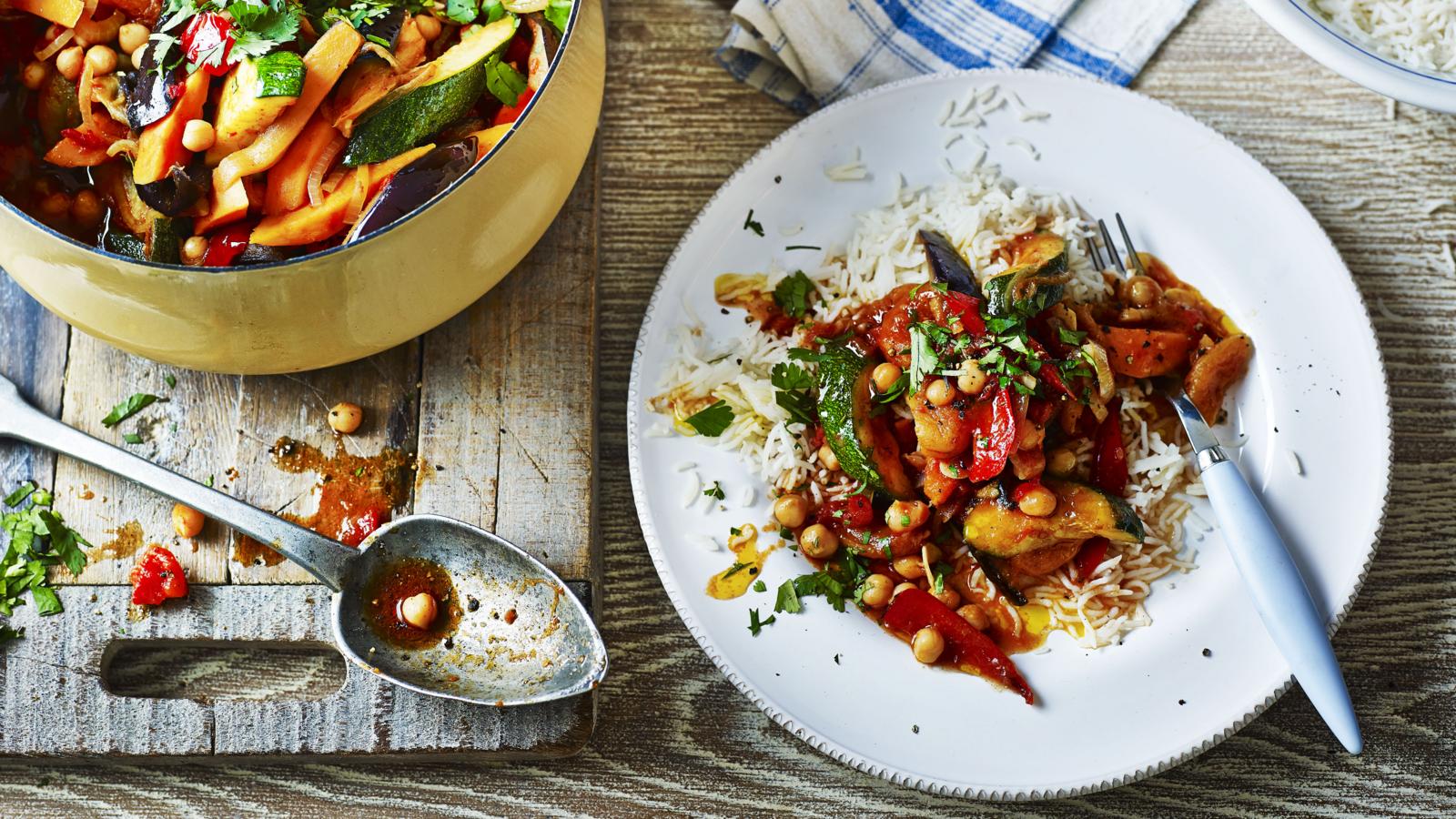
Vegetable and Chickpea Tagine
This hearty meat-free tagine is packed with vegetables and chickpeas. It is an easy way to use whatever is in season; squash, aubergine and courgette all work particularly well.
Ingredients
- 1 tbsp olive oil
- 1 onion, chopped
- 2 garlic cloves, crushed
- 1 tsp ground cumin
- 1 tsp ground coriander
- ½ tsp ground cinnamon
- 1 red pepper, chopped
- 1 small aubergine, cut into chunks
- 1 courgette, sliced
- 400g tin chopped tomatoes
- 400g tin chickpeas, drained and rinsed
- 200ml vegetable stock
- 50g dried apricots, chopped (optional)
- Fresh coriander or parsley, to serve
- Salt and black pepper
Method
- Warm the oil in a tagine or heavy casserole. Add the onion and cook until soft, then stir in the garlic, cumin, coriander and cinnamon.
- Add the pepper, aubergine and courgette. Cook for a few minutes, stirring to coat the vegetables in the spices.
- Pour in the tomatoes and stock. Add the chickpeas and apricots, if using, then season with salt and pepper.
- Cover and simmer gently for 30–40 minutes, until the vegetables are tender and the sauce has thickened. Stir occasionally and add a splash of water if it becomes too dry.
- Finish with fresh herbs and serve with couscous, rice or flatbread.
Lamb Tagine with Prunes and Almonds
Slow-cooked lamb, sweet prunes and toasted almonds make a richly flavoured dish often served for a special meal. Allow plenty of time for the lamb to become tender, and keep the heat low once the tagine is simmering.
Ingredients
- 800g diced lamb shoulder
- 1 tbsp olive oil
- 1 onion, finely chopped
- 2 garlic cloves, crushed
- 1 tsp ground ginger
- 1 tsp ground cinnamon, plus a pinch for the prunes
- 1 tsp ground cumin
- ½ tsp ground turmeric
- 500ml lamb or chicken stock
- 150g prunes, stoned
- 1 tbsp honey
- 40g flaked almonds, toasted
- Salt and black pepper
Method
- Season the lamb. Heat the oil in a tagine or heavy casserole and brown the meat in batches. Transfer it to a plate.
- Cook the onion in the same pan until softened. Add the garlic, ginger, cinnamon, cumin and turmeric, and stir for about a minute.
- Return the lamb to the pan and add the stock. Cover and simmer gently for 1½–2 hours, until the meat is tender. Check occasionally and add a little water if needed.
- Add the prunes and honey, along with a pinch of cinnamon. Cook uncovered for a further 10–15 minutes, until the sauce is glossy and slightly reduced.
- Scatter over the toasted almonds and serve with couscous or bread.
Tips for Making a Great Tagine
- Cook gently: A low, steady heat helps the meat become tender and allows the flavours to develop. If using a traditional clay tagine, follow the maker’s instructions, as some need to be soaked or heated gradually.
- Brown ingredients first: Browning meat and softening onions before adding liquid gives the finished dish extra depth.
- Balance the flavours: Tagines can be savoury, sweet, tangy or a little of each. Taste before serving and adjust with herbs, lemon, seasoning or a touch of honey.
- Make it ahead: Many tagines taste even better the next day, once the spices have had time to mingle. Cool and refrigerate leftovers promptly, then reheat until piping hot.
Whether you choose chicken with preserved lemon, a colourful vegetable version or slow-cooked lamb with prunes, tagine recipes are wonderfully adaptable. Serve one at the centre of the table and let everyone tuck in.
Six Reasons to Love Tagine Recipes
- Full of warming Moroccan spices.
- Easy to adapt to different ingredients.
- Slow cooking creates tender, rich flavours.
- Great for meat-free meals with chickpeas.
- Ideal for sharing with family and friends.
- Often taste even better the next day.
Five Drawbacks of Tagine Recipes
- Slow cooking takes time.
- Some ingredients can be hard to find.
- Preserved lemons and olives may be salty.
- Traditional tagine pots need careful handling.
- Recipes can be rich in oil or sugar.
Full of warming Moroccan spices.
One of the great pleasures of tagine recipes is their generous use of warming Moroccan spices. Cumin, ginger, cinnamon, paprika and turmeric infuse the ingredients as they slowly cook, creating deep, comforting flavours and an enticing aroma. The spices bring warmth without necessarily adding heat, making each tagine fragrant, richly flavoured and satisfying.
Easy to adapt to different ingredients.
One of the great advantages of tagine recipes is how easy they are to adapt to the ingredients you have available. Swap vegetables according to the season, use chicken, lamb or chickpeas as the main ingredient, and adjust the spices, herbs or dried fruit to suit your taste. This flexibility makes tagines a practical way to use up leftovers while still creating a warming, flavourful meal.
Slow cooking creates tender, rich flavours.
One of the great pleasures of tagine recipes is the slow cooking. As the ingredients gently simmer, meat becomes tender and spices have time to infuse the sauce, creating deep, rich flavours. The result is a comforting dish that tastes as though it has been carefully developed over hours.
Great for meat-free meals with chickpeas.
Tagine recipes are ideal for meat-free meals, with chickpeas adding plenty of substance, texture and plant-based protein. Simmered with vegetables, tomatoes and warming spices, they absorb the rich flavours of the sauce and create a satisfying dish that is delicious served with couscous or flatbread.
Ideal for sharing with family and friends.
Tagine recipes are made for sharing. Served straight from the pot, their generous portions and fragrant aromas bring family and friends together around the table. Pair a tagine with couscous or warm bread, and everyone can help themselves, making the meal feel relaxed, welcoming and full of flavour.
Often taste even better the next day.
Tagine recipes often taste even better the next day, as the spices and other ingredients have more time to mingle and deepen in flavour. This makes them a convenient choice for preparing ahead: simply cool and refrigerate the dish, then reheat it thoroughly before serving.
Slow cooking takes time.
One drawback of tagine recipes is that slow cooking takes time. Meat and vegetables often need to simmer gently for an hour or more to become tender and allow the flavours to develop, so a tagine may not be the best choice when you need a quick meal. Planning ahead helps, and the hands-on preparation is usually brief, but you’ll still need to allow plenty of cooking time.
Some ingredients can be hard to find.
Some tagine recipes call for ingredients such as preserved lemons, ras el hanout or specific types of olives, which may not be easy to find in every supermarket. You might need to visit a specialist food shop or order them online, adding time and expense to your cooking. If an ingredient is unavailable, a suitable substitute can often work, though it may change the dish’s traditional flavour.
Preserved lemons and olives may be salty.
Preserved lemons and olives bring a distinctive tangy, savoury flavour to tagine recipes, but both can be high in salt. This may make the finished dish too salty, especially if the recipe also includes stock or added seasoning. Rinse the olives, use less preserved lemon, choose reduced-salt stock and taste the tagine before adding extra salt.
Traditional tagine pots need careful handling.
Traditional tagine pots, especially those made from unglazed clay, need careful handling. They can be sensitive to sudden changes in temperature, so heating them too quickly or placing a hot pot on a cold surface may cause cracking. Some pots also need soaking or seasoning before use, and they should be cleaned gently rather than exposed to harsh detergents or abrupt temperature changes. This extra care can make a tagine pot less convenient than an ordinary casserole dish.
Recipes can be rich in oil or sugar.
Some tagine recipes can be high in oil or sugar, particularly those that use generous amounts of cooking oil, honey or dried fruit. These ingredients add flavour and help create a rich, glossy sauce, but they can also increase the dish’s calorie and sugar content. For a lighter version, use less oil, reduce added sweeteners and let spices, fresh herbs and preserved lemon bring plenty of flavour.
Related Posts

Enriching Visits: Embracing the Joy of Exploration
The Joy of Visiting New Places Embarking on a journey…

Discover the Ultimate Guide to the Best European City Breaks
Best European City Breaks The Best European City Breaks for…

Enchanting Traditions: The Marriage Festival Splendour of Morocco
The Splendour of Moroccan Marriage Festivals The Splendour of Moroccan…