
Toubkal Peak: A Guide to North Africa’s Highest Mountain
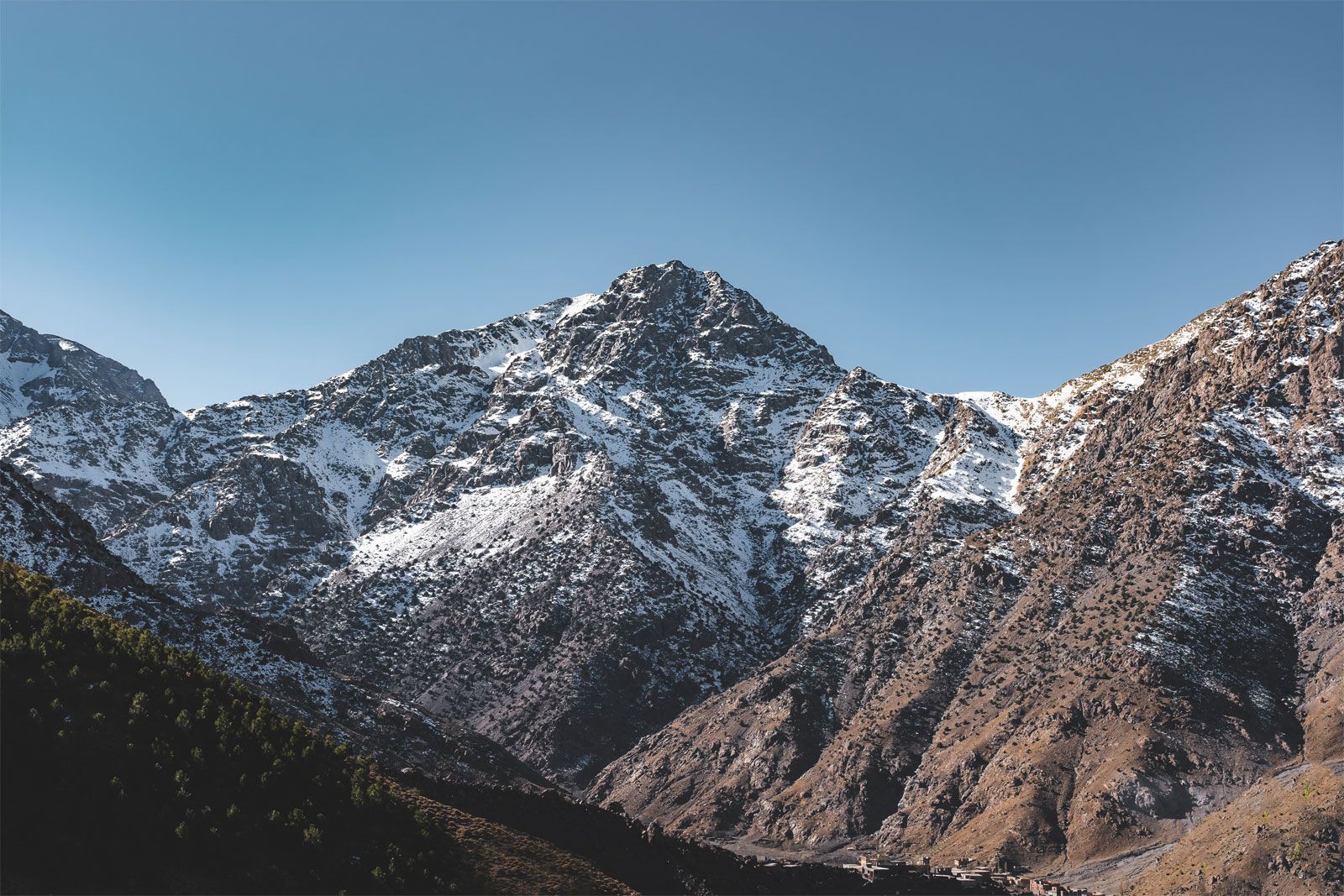
Rising to 4,167 metres above sea level, Toubkal is the highest peak in Morocco and North Africa. It stands in the High Atlas Mountains, around 60 kilometres south of Marrakech, within Toubkal National Park. Its dramatic slopes, mountain villages and wide-ranging views make it one of Morocco’s most rewarding trekking destinations.
Where is Mount Toubkal?
Toubkal lies in a rugged range of mountains shaped by deep valleys and high passes. The village of Imlil is the usual starting point for the climb. From there, trekkers follow established mountain paths towards the Toubkal Refuge, also known as the Neltner Refuge, before continuing to the summit.
The journey offers more than a mountain ascent. Along the way, visitors pass through Amazigh (Berber) communities and see terraced fields, walnut groves and traditional stone houses. Local guides and mule handlers are an important part of the region’s trekking culture.
What is the Toubkal trek like?
The standard route is commonly completed over two or three days. A typical itinerary starts in Imlil and follows a steady climb to the refuge, where trekkers spend the night. The summit attempt usually begins early the next morning, followed by a descent to the refuge and, often, back to Imlil.
Although the usual summer route does not involve technical climbing, it is still a strenuous high-altitude trek. The path is steep and rocky, and the altitude can make even a moderate pace feel demanding. A good level of fitness, suitable footwear and time to acclimatise all help make the experience safer and more enjoyable.
When is the best time to climb Toubkal?
Many people choose to climb during the warmer months, when the standard route is generally free of snow. Conditions can still change quickly, however, and summer days may be hot while nights at altitude can be cold.
In winter and early spring, snow and ice can transform the route. Crampons, an ice axe and mountaineering experience may be needed, depending on conditions. Anyone planning a winter ascent should seek current local advice and go with an appropriately qualified guide.
Preparation and safety
- Take time to acclimatise. Spending a night in the area before the summit attempt can help your body adjust to the altitude.
- Check the forecast. Mountain weather can change quickly, so ask local guides about conditions before setting out.
- Pack for changing temperatures. Bring layers, waterproof clothing, sun protection, plenty of water and snacks.
- Use a local guide. A registered guide can help with route-finding, local conditions and logistics. Check current requirements before your trip.
- Know when to turn back. Altitude sickness can cause headaches, nausea, dizziness and unusual tiredness. If symptoms worsen, descend and seek help.
Accommodation at the refuge is basic and can be busy during popular periods, so it is wise to arrange your trek and overnight stay in advance. Conditions and services may vary with the season.
Respecting the mountain
Toubkal’s natural environment is precious, and its valleys are home to local communities. Stay on established paths, take all rubbish back with you, and ask before photographing people. Choosing local guides and services can also help support the communities that welcome trekkers to the region.
A memorable High Atlas adventure
Reaching Toubkal’s summit is a challenging but achievable goal for many prepared walkers. The reward is a remarkable panorama across the High Atlas, with a sense of scale and quiet that feels far removed from the bustle of Marrakech. With careful planning, respect for local customs and a flexible approach to mountain conditions, a Toubkal trek can become a highlight of any visit to Morocco.
5 Essential Tips for Climbing Mount Toubkal Safely and Responsibly
- Acclimatise in the Atlas Mountains before climbing.
- Hire a licensed local guide, especially in winter.
- Check the weather and trail conditions before setting off.
- Pack warm layers, sturdy boots, water and sun protection.
- Take your rubbish with you and respect local customs.
Acclimatise in the Atlas Mountains before climbing.
Before climbing Toubkal, spend a day or two acclimatising in the Atlas Mountains to give your body time to adjust to the altitude. Consider taking a gentle walk around Imlil or staying overnight at a higher elevation before heading to the summit. A gradual ascent can help reduce the risk of altitude sickness and make the climb more comfortable; if you develop symptoms such as a headache, nausea or dizziness, stop ascending and seek local advice.
Hire a licensed local guide, especially in winter.
Hiring a licensed local guide is strongly recommended when trekking to Toubkal Peak, particularly in winter, when snow, ice and rapidly changing weather can make the route hazardous. A knowledgeable guide can assess conditions, help with navigation and advise on the right equipment, while also sharing insights into the mountains and local communities. Before setting out, check that your guide is properly licensed and agree on the route and plans for changing conditions.
Check the weather and trail conditions before setting off.
Before setting off for Toubkal Peak, check the latest weather forecast and trail conditions with a reliable local source or mountain guide. Weather in the High Atlas can change quickly, and snow, ice, strong winds or poor visibility may make the route difficult or unsafe. Adjust your plans if conditions are unsuitable, and be prepared to turn back if the weather worsens.
Pack warm layers, sturdy boots, water and sun protection.
Pack warm layers for Toubkal’s changeable mountain weather, as temperatures can drop sharply at altitude, especially in the early morning. Sturdy, well-broken-in boots provide grip and support on steep, rocky paths, while carrying enough water helps you stay hydrated during the climb. Sun protection is essential too: bring high-factor sunscreen, sunglasses and a hat, as the strong sun can be intense even when the air feels cool.
Take your rubbish with you and respect local customs.
Help keep Toubkal’s mountain environment clean by carrying all your rubbish back with you, including food wrappers and tissues. Respect local customs and the communities you pass through: dress considerately, ask before taking photographs of people, and follow your guide’s advice. A little thoughtfulness helps protect the landscape and makes the trek more welcoming for everyone.
Related Posts
Discover Enchanting Destinations in Morocco
Destinations in Morocco Exploring the Diverse Destinations of Morocco From…

Unveiling the Timeless Charm of Traditional Moroccan Culture
Exploring the Beauty of Traditional Moroccan Culture Exploring the Beauty…
Essential Morocco Travel Guide: Unveiling the Magic of North Africa
Morocco Travel Guide The Ultimate Morocco Travel Guide Welcome to…